


What is Direct Mail Marketing?
Direct mail marketing is a targeted advertising strategy that involves sending physical promotional materials—such as postcards, letters, catalogs, or brochures—directly to potential or existing customers through postal mail. Unlike digital advertising that can be easily ignored, blocked, or deleted, direct mail creates a tangible touchpoint that recipients can hold, read, and keep for future reference.
The beauty of direct mail lies in its physicality. When someone receives a well-designed postcard or letter in their mailbox, they're forced to interact with it—even if only to decide whether to keep or discard it. This moment of interaction is powerful and creates an impression that digital ads simply cannot replicate.
Modern direct mail marketing combines traditional offline channels with sophisticated data analytics, demographic targeting, and digital integration (such as QR codes and personalized URLs) to create highly effective, measurable campaigns that drive real business results.
Why Direct Mail Still Works in 2024
Despite the rise of digital marketing, direct mail continues to deliver impressive results. Here's why it remains one of the most effective marketing channels:
1. Superior Response Rates
According to the Data & Marketing Association (DMA), direct mail achieves response rates of up to 9% for house lists and 5% for prospect lists—significantly higher than email (1%) and digital display ads (0.2%). This means for every 1,000 pieces mailed, you can expect 50-90 responses, compared to just 2 responses from 1,000 digital display impressions.
These response rates translate directly to ROI. Businesses report an average ROI of $43 for every dollar spent on direct mail when campaigns are properly targeted and executed. Our case studies demonstrate this consistently, with clients achieving 3X to 10X returns across industries from roofing to dental practices.
2. Less Competition for Attention
The average person receives 121 emails per day but only 2-3 pieces of direct mail. While email inboxes are cluttered with promotional messages competing for attention, your mailbox presents a much less crowded environment. This scarcity creates opportunity—your message has a better chance of being seen, read, and acted upon.
Additionally, there's no "spam folder" for physical mail. Every piece that reaches a mailbox gets physical handling, which creates an opportunity for your message to make an impact. Recipients must physically touch and look at your mail piece, even if only for a moment while sorting their mail.
3. Tangible and Memorable
Neuroscience research shows that physical marketing materials leave deeper impressions in the brain than digital ones. A study by Canada Post found that direct mail requires 21% less cognitive effort to process than digital media, meaning it's easier for recipients to understand and remember your message.
Physical mail also engages more senses—touch, sight, and potentially smell (if using textured or scented materials). This multisensory experience creates stronger memory encoding, leading to better brand recall. Recipients are 70% more likely to remember your brand when they receive physical mail compared to digital advertising.
4. Trust and Credibility
In an era of digital fraud, phishing scams, and fake reviews, consumers trust physical mail more than digital channels. Direct mail is perceived as more trustworthy because it requires a real investment—companies wouldn't spend money printing and mailing materials unless they were legitimate businesses.
USPS research indicates that 56% of consumers say receiving mail makes them feel more valued by brands, and 73% prefer direct mail for learning about new products and services. This trust factor is particularly important for high-value services, B2B marketing, and industries where credibility is paramount (healthcare, financial services, legal, etc.).
5. Targeted Precision
Modern direct mail isn't spray-and-pray marketing. Today's mailing list providers offer sophisticated targeting capabilities that rival digital platforms. You can target prospects based on hundreds of data points including demographics (age, income, home value, education), psychographics (interests, lifestyle, purchasing behavior), geographic location (down to specific neighborhoods or postal routes), and firmographics for B2B (company size, industry, revenue).
Variable data printing allows you to personalize each mail piece with the recipient's name, address, relevant offers, and customized imagery. This level of personalization drives significantly higher response rates—personalized direct mail pieces achieve response rates up to 135% higher than non-personalized mail.
6. Longer Lifespan
Unlike digital ads that disappear with a scroll or click, direct mail has staying power. Postcards get placed on refrigerators, letters sit on desks for days, and brochures get passed around to family members or colleagues. The average direct mail piece stays in a home for 17 days before being discarded or acted upon.
This extended exposure window provides multiple opportunities for your message to influence behavior. Recipients might see your postcard several times while walking past the refrigerator, each viewing reinforcing your brand and offer until they're ready to take action.

Types of Direct Mail Campaigns
Different direct mail formats serve different marketing objectives. Understanding which format works best for your goals is crucial:
Postcards
Postcards are the workhorse of direct mail marketing. They're cost-effective, attention-grabbing, and perfect for straightforward messages. With no envelope to open, your message is immediately visible, achieving 100% "open rate." Standard sizes include 4"×6", 6.25"×9", and 6"×11", with larger sizes commanding more attention.
Postcards work exceptionally well for: local service businesses (HVAC, roofing, landscaping), retail promotions and sales announcements, real estate farming and listing announcements, restaurant specials and grand openings, event invitations and reminders, appointment reminders and healthcare campaigns.
Letter Mail
Letters in envelopes create anticipation and convey importance. They're ideal for longer-form content, detailed explanations, and messages that require a personal touch. Letters achieve higher perceived value and are perfect for sophisticated offers.
Letter mail excels for: B2B prospecting and sales, financial services and insurance offers, nonprofit fundraising campaigns, political messaging and advocacy, professional services (legal, accounting), high-value product launches and detailed service explanations.
Catalogs and Brochures
For businesses with multiple products or complex service offerings, catalogs and multi-page brochures provide space to tell comprehensive stories. These formats work well for: e-commerce retailers showcasing product lines, hospitality and tourism destinations, healthcare facilities and service portfolios, educational institutions and course offerings, home improvement and product catalogs.
Dimensional Mail
For high-value prospects or VIP customer retention, dimensional mail (packages and boxes) achieve near-100% open rates. While more expensive per piece, these campaigns generate exceptional responses for the right audience. Common applications include: executive-level B2B outreach, high-net-worth customer acquisition, milestone celebrations and customer anniversaries, product samples and demonstrations.
Who Should Use Direct Mail Marketing?
While nearly any business can benefit from direct mail, certain industries and business models see exceptional results:
Local Service Businesses
Businesses serving defined geographic areas see tremendous ROI from direct mail. Roofing companies, HVAC contractors, plumbers, electricians, landscapers, and home cleaning services can target specific neighborhoods where their services are needed. Geographic targeting ensures every dollar spent reaches potential customers within their service area.
Real Estate Professionals
Realtors use direct mail for farming neighborhoods, announcing listings, promoting open houses, and staying top-of-mind with past clients. Real estate is a relationship business, and regular touchpoints through direct mail build the trust needed when someone is ready to buy or sell.
Healthcare and Dental Practices
Medical, dental, chiropractic, and other healthcare practices use direct mail to attract new patients, announce new services, promote special offers, and remind patients about appointments or preventive care. The credibility of physical mail aligns well with the trust required in healthcare relationships.
Restaurants and Food Services
Restaurants leverage direct mail for grand opening announcements, special promotions, loyalty programs, and menu updates. Coupon redemption rates from direct mail significantly exceed digital coupons, driving foot traffic and trial.
Financial Services
Banks, credit unions, insurance agents, financial advisors, and mortgage lenders benefit from direct mail's credibility. High-value financial decisions require trust, and physical mail conveys legitimacy better than digital advertising.
E-commerce and Retail
Both online and brick-and-mortar retailers use catalogs, promotional postcards, and coupon mailers to drive purchases. Direct mail generates immediate response—recipients often act within days of receiving compelling offers.
Nonprofits
Fundraising through direct mail remains highly effective. Donor acquisition and retention campaigns via mail consistently outperform digital channels, particularly for older donor demographics who prefer tangible communications.
Direct Mail Costs and ROI
Understanding direct mail economics is essential for budget planning and ROI evaluation:
Typical Costs
All-in costs for postcard campaigns (including design, printing, mailing list, addressing, and postage) typically range from $0.75 to $1.50 per piece, depending on size, quantity, and mailing class. Larger quantities achieve lower per-piece costs through bulk discounts on both printing and postage.
For example, a 5,000-piece campaign using 6.25"x9" postcards might cost approximately $0.90 per piece ($4,500 total), while 10,000 pieces might drop to $0.75 per piece ($7,500 total). First-Class Mail costs more but delivers faster (1-5 days) with forwarding service, while USPS Marketing Mail saves money but takes longer (5-21 days).
Calculating ROI
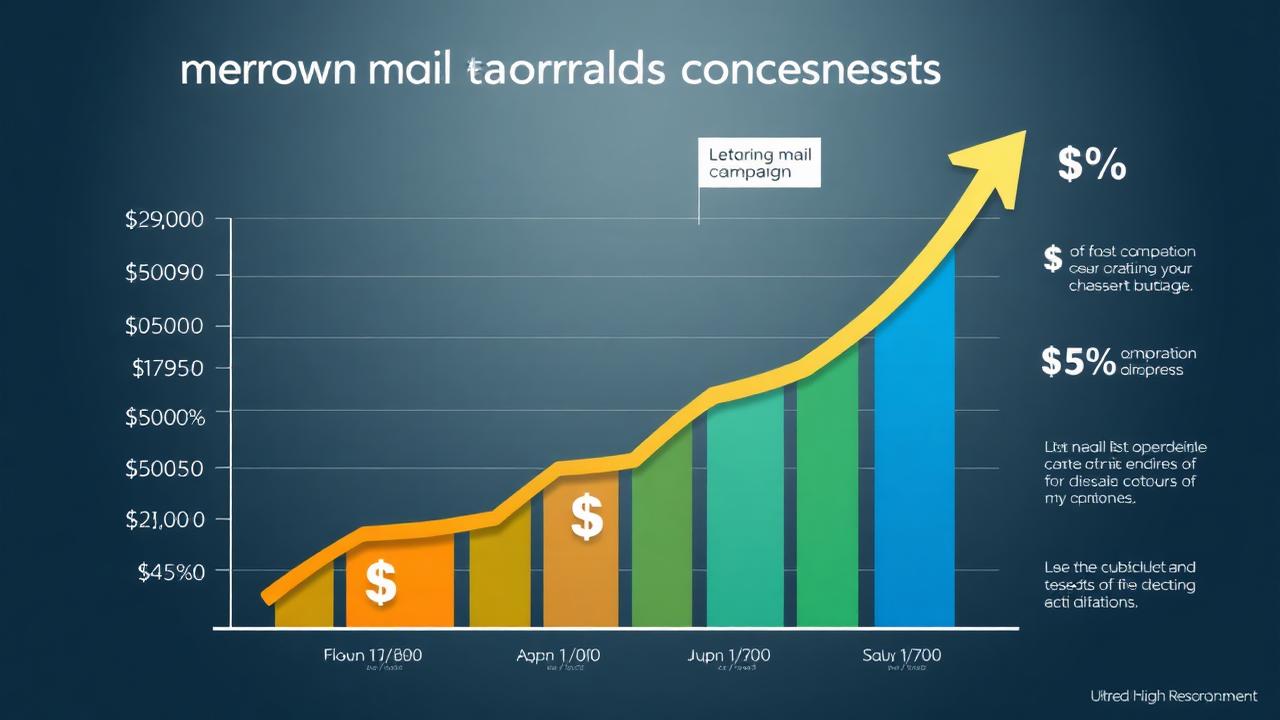
ROI calculation is straightforward: (Revenue Generated - Campaign Cost) / Campaign Cost. Let's examine a realistic example:
A roofing company mails 5,000 postcards to homeowners in specific ZIP codes. Total campaign cost: $4,500. Response rate: 2% (100 inquiries). Conversion rate: 20% (20 jobs booked). Average job value: $8,500. Total revenue: $170,000. ROI: ($170,000 - $4,500) / $4,500 = 3,678% or approximately 37X return.
Even with more conservative assumptions, direct mail delivers strong returns. If the same campaign achieved just 1% response and 10% conversion (5 jobs), revenue would still be $42,500—generating nearly 10X ROI.
Maximizing ROI
Several strategies improve direct mail ROI: Target precisely (better targeting reduces wasted impressions), test different offers and creative (A/B testing identifies what works), mail consistently (frequency builds brand recognition), integrate with digital (QR codes, personalized URLs), track response meticulously (know which campaigns work), and follow up quickly (speed-to-lead matters enormously).
Best Practices for Direct Mail Success
1. Start with Clear Objectives
Define what success looks like before launching. Are you seeking brand awareness, lead generation, sales, appointments, website visits, or phone calls? Your objective determines campaign design, offer, and success metrics.
2. Target the Right Audience
Work with experienced list providers to identify your ideal prospects. Use demographic, geographic, and behavioral data to ensure your message reaches people most likely to respond. Investing in quality targeting dramatically improves response rates.
3. Create Compelling Offers
Your offer is the engine of response. Generic messages get generic results. Create compelling, time-limited offers that provide clear value and urgency. "25% off through December 31st" outperforms "Contact us for more information."
4. Design for Impact
Professional design matters. Use bold headlines, high-quality images, clear calls-to-action, and ensure critical information is immediately visible. Your postcard has seconds to capture attention—design must work hard.
5. Make Response Easy
Include multiple response options: phone number, website URL, QR code, reply card. Make it effortless for recipients to take the next step, whatever their preference.
6. Test and Optimize
Split test different versions of your campaign. Test different headlines, offers, designs, and mailing lists. Small improvements in response rates compound into significant ROI gains over time.
7. Integrate with Digital
Direct mail and digital work better together. Use QR codes to drive traffic to landing pages. Retarget mail recipients with digital ads. Follow up mail with email sequences. Multi-channel campaigns outperform single-channel approaches.
8. Mail Consistently
One-off campaigns rarely maximize potential. Consistent mailing builds brand recognition and captures prospects at different stages of their buying journey. Develop a mailing calendar and stick to it.
Getting Started with Direct Mail
Launching your first direct mail campaign doesn't have to be complicated. Partner with an experienced full-service direct mail provider who handles the entire process from strategy and list selection through design, printing, and mailing.
At IdentiReach, we manage every aspect of direct mail campaigns for businesses across industries. Our team helps you identify target audiences, develop compelling offers, create professional designs, and handle all the technical details of mailing preparation and USPS compliance.
Whether you're a local service business looking to generate leads, a restaurant promoting a special offer, or a real estate agent farming a neighborhood, direct mail delivers measurable results when executed strategically.
Ready to harness the power of direct mail for your business? Contact us for a free consultation and custom quote. We'll help you develop a campaign strategy that drives real ROI.